

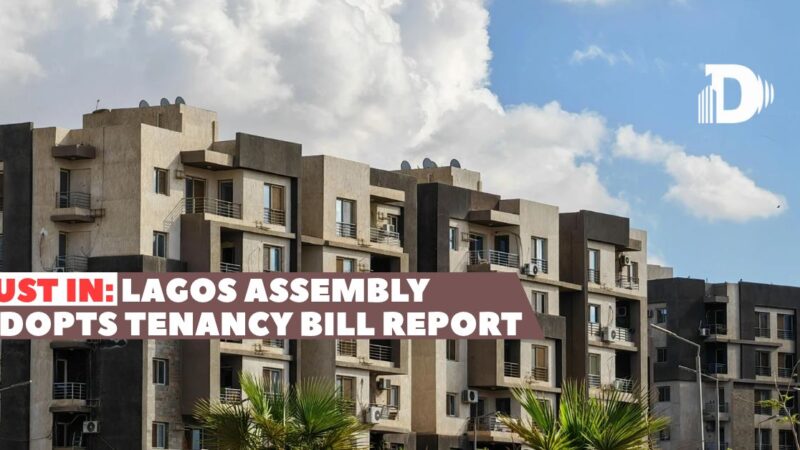
Lagos Assembly Adopts Tenancy Bill Report: What the Proposed Law Means for Landlords, Tenants, Agents and Property Investors
LAGOS, Nigeria — The Lagos State House of Assembly has adopted the report of its Committee on Housing on the Lagos State Tenancy Bill, 2025, moving the state a step closer to a single, modern law governing the relationship between landlords and tenants and the recovery of premises. The adoption happened at plenary on Monday, 23 November 2026, and it has put one of the most closely watched pieces of real estate legislation in Nigeria back in the spotlight.
If you rent a home in Lagos, own a rental property, work as an estate agent, or invest in property anywhere in Nigeria, this development deserves your attention. Below, we break down what happened, what the bill contains, what is still unknown, and what practical steps you should take now.
Important note on status: Adoption of a committee report is a legislative milestone, not the passage of a law. The bill must still complete the remaining stages in the Assembly and receive the Governor’s assent before it takes effect. Until then, the existing tenancy laws of Lagos State remain the operative rules.
Quick Summary: Key Facts at a Glance
- What happened: The Lagos State House of Assembly adopted the Housing Committee’s report on the Lagos State Tenancy Bill, 2025.
- When: Monday, 23 November 2026.
- Who presented the report: Hon. Olusegun Ege, Chairman of the House Committee on Housing.
- Who presided: Speaker Rt. Hon. (Dr.) Mudashiru Ajayi Obasa.
- Formal title of the bill: A Bill for a Law to Regulate the Relationship Between Landlords and Tenants Including the Procedure for the Recovery of Premises in Lagos State and for Other Connected Matters.
- Public hearing held: Wednesday, 13 August 2025.
- Passed second reading: July 2025.
- What the bill aims to do: Replace the current tenancy framework with a structured, transparent regime covering rent, evictions, agents, deposits and court procedure.
- Still needed: Remaining legislative stages and the Governor’s assent.
What Exactly Happened at the Lagos Assembly?
According to reports from Channels Television, Tribune Online and The Telegraph, the Housing Committee Chairman, Olusegun Ege, presented the committee’s report on the bill to the House. He explained that the legislation is designed to tackle persistent problems in the rental sector, to spell out the rights, responsibilities and obligations of landlords and tenants, and to set out proper procedures for recovering premises.
After the presentation, the Assembly, presided over by Speaker Mudashiru Obasa, adopted the committee’s recommendations as the resolution of the House. Reports describe the move as a further step in the legislative process, with an emphasis on fairness, accountability and protection for the interests of both property owners and tenants.
The committee’s recommendations came after a public hearing on 13 August 2025, where stakeholders from the housing sector, the legal profession, the real estate industry, government institutions and civil society organisations made submissions to strengthen the proposed law.
How We Got Here: A Short Timeline
| Date | Milestone |
|---|---|
| July 2025 | The bill is introduced and passes second reading in the Lagos Assembly. It is referred to the Committee on Housing for further review. |
| 13 August 2025 | Public hearing: stakeholders submit views on the draft. |
| Late 2025 | Law firms and the media publish detailed breakdowns of the draft; public debate intensifies over advance rent, agent fees and evictions. |
| March 2026 | Lagos Housing Commissioner Moruf Akinderu-Fatai says at the ministerial press briefing that a new tenancy law is planned to sanitise the housing sector. |
| 23 November 2026 | The Assembly adopts the Housing Committee’s report. |
Why Lagos Wants a New Tenancy Law
Lagos is Nigeria’s most expensive and most competitive rental market. Anyone who has searched for an apartment there knows the pattern: heavy upfront payments, high agent fees, sudden rent increases, and, in some disputes, landlords taking matters into their own hands by locking tenants out or cutting off utilities.
Legal commentators note that many protections already exist on paper. The real gaps have been uneven coverage (the older law excluded areas such as Apapa, Ikeja GRA, Ikoyi and Victoria Island), weak enforcement, slow court processes and the activities of unregistered agents. The new bill is meant to address these gaps in one law.
Key Provisions of the Bill (As Published in the Draft)
The following summary is based on the published draft bill and on analyses by Nigerian law firms and news organisations. The Housing Committee’s amendments have not been fully published in the reports we reviewed, so the final text may differ. Always check the final enacted law when it becomes available.
1. Statewide Application
The draft applies to all premises in Lagos State, residential and business. This removes the geographic exclusions in the older framework, bringing premium areas such as Ikoyi, Victoria Island, Ikeja GRA and Apapa under the same rules.
2. Registration and Regulation of Agents
Under Section 3, agents must be registered with the Lagos State Real Estate Regulatory Authority (LASRERA). The draft:
- Caps agency commission at 5% of annual rent.
- Requires agents to issue receipts for rent collected.
- Requires agents to remit rent to the landlord within seven working days (or another agreed period).
- Prohibits collecting rent from one tenant while holding rent from another for the same premises.
- Provides penalties on conviction, including refund of sums collected and imprisonment of up to two years, a fine of ₦1 million, or both.
3. Limits on Advance Rent
Section 5 limits how much rent can be demanded or paid upfront:
- Sitting monthly tenants: no more than three months’ rent in advance.
- Sitting yearly tenants: no more than one year’s rent.
- New or prospective tenants: no more than one year’s rent.
The restriction runs both ways: tenants are also barred from offering more than the limit, which is aimed at discouraging bidding wars. Breaches attract a fine of up to ₦1 million or up to three months’ imprisonment.
4. Receipts and Transparency
Landlords must issue receipts for rent received, stating the date, the parties’ names and addresses, the premises, the amount and the period covered. Landlords must also give tenants a written account of service charges and deposit use every six months, and security deposits must be refunded at the end of the tenancy unless damage can be documented.
5. Tenant Rights and Obligations
Tenants have the right to quiet and peaceful enjoyment, privacy, exclusive possession (subject to the landlord’s right of inspection on notice) and use of common areas. A tenant who made improvements with the landlord’s written consent may claim compensation if the tenancy is ended. Tenants, in turn, must pay rent as agreed, keep the premises in good repair, avoid unauthorised alterations or subletting, and return the premises in tenantable condition.
6. Landlord Obligations and Rights
Landlords must not disturb a tenant’s quiet enjoyment: no removing roofs, cutting electricity or water, restricting common facilities, or seizing the tenant’s belongings. They keep the right to inspect on notice, to insist on lawful use of the premises and to collect service charges where applicable.
7. Rent Increases and the Court’s Role
The bill does not impose rent control. Instead, Section 33 allows a tenant to challenge an unreasonable increase in court. The court looks at rents in the same or similar localities, the evidence from both sides and any special circumstances. A landlord cannot evict a tenant while such a dispute is pending.
8. Notices and Recovery of Premises
- Notices to quit follow the tenancy type: one month for monthly tenancies and six months for yearly tenancies, according to legal analyses of the draft.
- Notices may only be served between 8:00 a.m. and 5:00 p.m., and service must follow the modes set out in the draft (in person, to an adult resident, by courier, or by affixing to a conspicuous part of the premises).
- For tenants who refuse to leave after the tenancy ends or after a notice to quit, the landlord may serve a notice of intention to recover possession, with a date not less than seven days from the notice.
- For breaches of covenant, the landlord must first serve a notice identifying the breach and requiring the tenant to remedy it or pay compensation.
9. Faster Court Procedure
Possession claims may be started by originating summons. Hearings are to be fixed within 14 days after the filing window closes, courts may sit on weekends, public holidays or virtually, and mediation is capped at 30 days. A tenant who wishes to sue a landlord must give 30 days’ written notice and show that rent is up to date.
10. Criminalising Self-Help Evictions
Sections 10 and 43 treat forced eviction, harassment, threats and deliberate damage aimed at pushing a tenant out as offences. Reported penalties include a fine of not less than ₦1 million, a jail term of up to six months, or both.
Reactions and Expert Commentary
Lawyers and analysts have broadly welcomed the direction of the bill while flagging enforcement as the key test.
- Faster justice for landlords. A Guardian commentary argued that when landlords see quicker justice they are less likely to resort to self-help, and that predictable rules encourage investors to build.
- Enforcement concerns. Analysts at Templars noted that advance-rent limits already exist in the current law yet are often ignored, so the state’s enforcement approach will decide whether the new law changes behaviour. Housing experts have also cautioned that enforcement could be hard in high-demand, low-supply areas such as Lekki, Ikoyi and Ikeja.
- Calls for a dedicated enforcement body. During the second reading debate, one lawmaker described the bill as timely and people-centred while asking for a dedicated enforcement body.
- Practical drafting suggestions. Some lawyers have recommended tighter evidence rules for notices affixed to premises, such as photographs and witness confirmation, and clearer coverage of breaches beyond rent arrears.
What the Adoption Means for Each Group
For Tenants
If the bill becomes law as drafted, tenants stand to gain a cap on upfront rent, written receipts, protection from lock-outs and utility cut-offs, a court route to challenge unreasonable increases, and clearer rules on deposits. In practical terms, tenants should start keeping organised records now: tenancy agreements, receipts, bank transfer evidence and written communications.
For Landlords
Landlords gain faster, more structured recovery procedures, particularly for rent default, and clearer rules for serving notices. They also take on new duties: receipts, six-monthly service charge and deposit accounts, documented deductions from deposits, and strict avoidance of self-help. Landlords who rely on large advance payments should begin reviewing their cash-flow plans and consider alternatives such as stronger deposits or guarantees for commercial leases.
For Estate Agents
Registration with LASRERA, a 5% commission ceiling, mandatory receipts and prompt remittance will reshape agent economics. Compliant, professional agencies may benefit as unregistered operators are squeezed out.
For Property Investors and Developers
A clearer, statewide tenancy regime can make rental yields more predictable and exits from problem tenancies faster, which matters to anyone building a rental portfolio. Investors should still model rental income conservatively until the final law and its enforcement record are known. For a data-driven view of rental performance across Nigerian cities, see our Real Estate Investment Returns in Nigeria: Rental Yields and Appreciation by City series.
Is This Happening Elsewhere in Nigeria?
Yes. Rent reform is a live national conversation. At the federal level, a bill before the House of Representatives would cap advance rent at one year for Abuja tenants, with fines of up to ₦20 million for offenders. We covered the details in Abuja Tenants Could Pay No More Than One Year’s Rent Upfront Under New Reps Bill.
For investors comparing how legal frameworks differ across markets, our Comparative African Real Estate Report: Nigeria, Kenya, Ghana, Egypt, and South Africa explains why legal friction remains a central consideration in Nigerian property investing.
The DEVALOP Perspective: Rules Protect Value
At DEVALOP, we advise buyers and investors across South West Nigeria, and our consistent message is that clear rules and verified documentation protect value. A stronger tenancy framework in Lagos is positive for the sector because it reduces disputes and sends a signal that property rights, for owners and occupants alike, are taken seriously.
Whether you plan to buy land to hold, build to let, or co-invest, the fundamentals do not change:
- Verify before you pay. Follow the steps in our guide, How to Verify Land Before You Buy in Nigeria: A State-by-State Checklist for Lagos, Abuja, and Oyo.
- Know the fraud patterns. Read Real Estate Fraud in Nigeria: Data, Patterns, and Prevention so you can recognise double-allocation and fake-title schemes early.
- Choose your partners carefully. Our checklist on how to choose a real estate company in Nigeria sets out the questions to ask.
- Understand the development process. If you plan to build rental units, review the Oyo State Real Estate Property Development Process (Step-by-Step Guide).
- Look at growth corridors. See Emerging Cities Around Ibadan for where demand for housing is expanding.
- Investing from abroad? Our Global Diaspora Real Estate Investment Guide covers how to buy Nigerian property safely from overseas.
- Watch infrastructure and compensation news. Government projects affect land values and setbacks; see Ibadan Circular Road Compensation: Oyo Pays ₦4.6bn, Fixes 75-Metre Setback.
Interested in verified properties with good title? Explore DEVALOP City Estate, Ogunwende, Ido and Cedar Court Estate, Elenusonso, Ibadan, browse all DEVALOP projects, read our FAQs, or contact our team.
What Happens Next?
Based on the reports we reviewed, the adoption of the committee report advances the bill but does not complete it. Readers should watch for:
- Publication of the committee’s amendments, which will show how the draft changed after the August 2025 public hearing.
- Remaining legislative stages in the Assembly, followed by passage.
- Governor’s assent, after which the law is published and takes effect according to its commencement and transitional provisions.
- Implementation details, including enforcement arrangements, LASRERA’s role, and how existing tenancies are treated.
We will update this article as official information is released.
Practical Checklist: What to Do Now
Tenants
- Keep copies of your tenancy agreement and every rent receipt.
- Pay by traceable means (bank transfer) where possible.
- Do not pay beyond what you are comfortable with just because an agent insists; understand that limits are proposed but not yet in force.
Landlords
- Review your tenancy agreements and notice procedures.
- Start issuing proper receipts and keep records of service charges and deposit deductions.
- Never use lock-outs, utility cut-offs or removal of property; use the courts.
Agents
- Confirm your LASRERA registration status.
- Review your fee structure against the proposed 5% ceiling.
- Put receipting and prompt remittance systems in place.
Investors
- Stress-test rental income assumptions against lower advance-rent collection.
- Priorities properties with clean, verified title and clear tenancy documentation.
Frequently Asked Question
No. The Assembly has adopted the Housing Committee’s report on the bill. It must still complete the remaining legislative steps and receive the Governor’s assent.
Hon. Olusegun Ege, Chairman of the House Committee on Housing, presented it. The sitting was presided over by Speaker Mudashiru Obasa.
In the published draft, a sitting monthly tenant can be asked for no more than three months’ rent, a sitting yearly tenant no more than one year’s rent, and a new tenant no more than one year’s rent. Final figures should be confirmed in the enacted law.
The draft caps agency fees at 5% of annual rent and requires agents to be registered with LASRERA.
Yes, but through the process set out in the law and the courts. The draft criminalises forced evictions and harassment without a court order.
No. It lets tenants challenge unreasonable increases in court rather than fixing rent levels.
That depends on the remaining legislative stages, the Governor’s assent and the law’s commencement provisions. No date has been announced in the reports we reviewed.
Disclaimer: This news article is for general information and news purposes and is not legal advice. The bill’s content may change before it becomes law. Consult a qualified Nigerian property lawyer about your specific situation.