

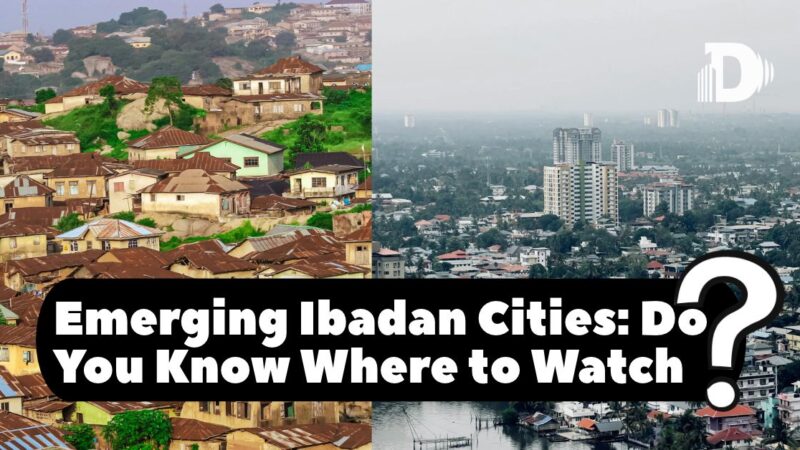
Emerging Cities Around Ibadan: Where the City Is Growing Next in 2026 and Beyond
For a long time, people described Ibadan as one big bowl of brown roofs spreading out from Mapo Hall. You were either in town, around Ring Road, Dugbe and Bodija, or you were “going far.” That picture is out of date. The city is still the core, but the interesting action is happening at the edges, where places that were farmland or a single junction ten years ago now have their own estates, schools, markets and traffic.
This guide looks at the parts of Ibadan that are turning into towns in their own right: Moniya, Akobo, the Ido axis, Egbeda and Alakia, Apete, and the Oluyole extension. It explains what is pushing each one, what asking prices have looked like in 2026, and what can go wrong. We build in this part of the state, so we say up front where we have a stake.
Why Ibadan keeps spilling outward
The pressure is simple to describe. Oyo State’s population was projected at about 8.5 million in 2025, and most of that growth lands in and around the capital. A 2025 continental study of African urbanisation, put together by the African Development Bank and partner institutions, placed Ibadan 22nd among the 30 fastest-growing cities on the continent and projected 8.7 million people in the city by 2050.
When a city of that size has no room left in the middle, people go where land is cheaper and roads are improving. The question for a buyer is which edges will turn into real places and which will stay as empty plots with a nice signboard.
What makes an area an “emerging city” and not just cheap land
Distance from the centre is not the test. Plenty of places are far and cheap and stay that way. We look for four things together:
- A road that already works. Not a road in a press release. You should be able to drive to the area at 7am on a weekday and see how long it takes.
- A reason to be there that is not the land itself. A university, a market, an industrial zone, a rail station or a large employer. Demand that exists without speculators.
- Daily services. Water, power, shops, a pharmacy, a school. Once these arrive, families move in, and families are what turn land into a neighbourhood.
- Titles you can verify. A fast-growing area attracts both honest developers and the other kind. Clean paperwork is what separates an investment from a dispute.
An area that scores on all four is emerging, and that is why this article focuses on emerging cities around Ibadan. One that scores on only the first is usually a story that sellers tell.
The road that redrew the map
Any honest discussion of growth around Ibadan starts with the Rashidi Ladoja Circular Road, a 110-kilometre route planned in three segments across six local government areas: Oluyole, Ido, Egbeda, Ona-Ara, Lagelu and Akinyele. The first 32 kilometres, running from the Technical University to the Ibadan-Ife road at Badeku, are the part you can actually use or soon will. In August 2026, Oyo’s acting governor said that stretch was fully dual carriageway, asphalted, with streetlights and toll gates installed, and that contractors expected to finish by the end of September and be ready for commissioning. An opening had earlier been pencilled in for February 2026, so dates on this project have slipped before. Until the ribbon has been cut, we cannot treat any date as fact.
The part that matters most to a buyer is the width of land the government can claim. In late November 2025, after protests by residents in Ido, Oluyole and other communities, Governor Seyi Makinde said that in built-up areas the setback would not go beyond 150 metres, and that anyone marking beyond that should be disregarded. The older, wider figure of 500 metres on each side still applies where nothing has been built. He also promised that no house would be demolished without compensation, and the state’s new-towns agency, created in April 2025, was named the single point of contact for affected communities. Compensation for the first section has been paid, while assessments along the rest of the route were still going on, and at least one underpayment was publicly admitted and put under review.
For you, this means the road is real and is shifting values, and it also means that part of the corridor sits inside government setbacks. That is why we published a separate warning about the Bako, Fenwa, Lade and Elenusonso axis and a full list of the communities the road touches. Read both before you put money anywhere near the route.
Emerging Citing Around Ibadan: Six areas worth watching
Moniya
Moniya sits on the northern side, close to the Lagos-Ibadan rail terminus, and that connection is the main reason people keep talking about it. It still has some of the lowest entry prices on this list, with 500 sqm plots in estates along the Moniya-Iseyin road advertised from under ₦1 million to around ₦5 million in 2026, and a typical figure nearer ₦2.5 million. The wide spread tells you the layouts vary a lot, from raw land far off the road to serviced estates on the frontage. Our Moniya land investment guide goes into the layouts and what to ask before paying.
Akobo and Akobo-Ojurin
Akobo is the clearest example of an area that has already moved. It benefits from nearness to Bodija and the University of Ibadan, improving internal roads, and a stock of gated estates. Asking prices have climbed far beyond Moniya or Ido: earlier in 2026 core plots were being advertised in the mid-teens of millions of naira, and a recent listing for 907 sqm of fenced land at ₦40 million works out to roughly ₦22 million per 500 sqm. Anyone arriving now is buying into an area that has had its first big jump, which is a different bet from buying early.
The Ido axis: Elenusonso, Ologuneru and Ogunwende
Ido is where the Circular Road and the western growth corridor meet, and it still offers a wide range of entry prices, from small plots in the hundreds of thousands of naira in older layouts to a few million in gated estates. The Polytechnic Ibadan, Lead City University and the Eleyele market give it demand that does not rely on speculation. It is also the area where the setback protests were loudest, so title and survey checks matter more here than almost anywhere. Our Ido land investment guide covers the sub-areas, and the Cedar Court Estate location guide explains how we assess a specific site in Elenusonso. Devalop City Estate in Ogunwende is also here, so weigh our view with that in mind.
Egbeda and the Alakia corridor
Egbeda is the logistics and industrial side of the story, and it sits close to the Samuel Ladoke Akintola Airport and the Lagos-Ibadan rail line, where the state has talked of planning a new business district. Prices have moved up sharply: fenced 500 sqm plots off the Airport Road in Alakia were being listed at around ₦10 million to ₦11 million recently, far above what the area fetched a year or two ago. The people renting here tend to be logistics workers and small-business operators, which makes the rental market steadier but less glamorous.
Apete
Apete trades on its closeness to the University of Ibadan and the student housing that follows. Last year, we processed a plot of land for one of our clients in this axis for ₦23.5 million naira. The same land was bought two years before the time at ₦11.5 million naira, and ₦5 million naira four years respectively. With this information, that location doubles in value almost every two years interval. As much as this price represents the commercial side of Apete, prices in the remote and rural parts of the community may differ. We could not find enough recent public listings to give a fair price band, so ask for recent sales evidence in the specific street if you are thinking of this area. Parts of the area are low-lying and can flood, which you can see for yourself in the rainy season, so visit in July, not January.
The Oluyole extension
Oluyole is the premium end of the new growth, on the southern side of the city. Listings grouped under the Oluyole extension and the Badeku end of the new road ran from about ₦2.5 million to ₦10 million for 500 sqm in 2026, and detached duplexes on the same side sell for far more than the land alone. If you want to live in a planned estate and can pay for it, this is the option. If you want cheap land to hold, the Ido axis and Moniya offer more room.
The numbers side by side
| Area | Asking price band for a 500 sqm plot (2026 listings) | What is pushing it | Main thing to check |
| Moniya | About ₦1m to ₦5m (typical ₦2.5m) | Rail terminus, expressway frontage | Layout approvals, land size claimed vs surveyed |
| Akobo core | Mid-teens of millions upward; one recent listing about ₦50m per 500 sqm | Bodija and UI proximity, gated estates | You are buying after the first jump |
| Ido axis | About ₦4m to ₦8.5m | Circular Road, institutions | Government setbacks and acquisition |
| Egbeda / Alakia | Around ₦10m to ₦15m for fenced plots near the airport road | Industry, airport, rail | Corridor and interchange alignment |
| Oluyole extension | About ₦2.5m to ₦10m | Estate living, new road | Price per built unit, not just land |
| Apete | No reliable recent band, but an actual Devalop recent transaction in the area stood at ₦23.5m with 100% upward potential every two years. | Student demand | Flooding |
A caution on that table. These are asking prices from listing sites in 2026, not completed sales, and they change quickly. A fenced, gated plot and a raw plot in the same area can differ by several times. Use the numbers to compare areas with each other and to spot a price that is far outside the range, and get current prices from a seller who can show you recent actual sales. Our Ibadan, Abuja and Lagos land cost comparison and the rental yield data by city give more context. For a sense of scale, inner-city plots in Jericho and Bodija are quoted at tens of millions, which is why buyers keep looking outward. (Land Republic publishes a regular listing survey if you want a second look).
Hype or growth: a quick test
Before you pay a deposit in any of these places, do three things yourself.
Go on a weekday morning. Drive there when everyone else is commuting. If it takes ninety minutes to cover a distance a map says is twenty minutes, believe the road, not the map.
Ask who has moved in. Families with school-age children are a stronger signal than a row of empty fenced plots. Count how many plots in the layout have buildings on them. An estate where nobody builds after five years is telling you something.
Ask what is built versus promised. A tarred road, a working borehole and a transformer are facts. “The government is coming to grade it” is a promise.
Title and survey: the part that decides everything
A fast-growing area is exactly where title problems multiply. Oyo State has been digitising land records and set up an anti-land-grabbing agency in 2025, and these tools are useful, but they check what is registered. They do not replace your own checks on the specific plot. The state’s own new-towns agency has also warned publicly about falsified survey documents, which is a good reason to hire your own surveyor.
Do the basics every time. Confirm the title, confirm it is not inside an acquisition or Circular Road setback, and get a surveyor to match the survey plan to the ground. Our guides walk through each step: how to verify land before you buy, verifying land title in Oyo State, and why a survey plan matters. If you want a ready list of questions for the seller, use our 20 questions to ask before you buy land in Ibadan.
Which area fits which goal
If you plan to build and live there within two or three years, put accessibility and services first, which points to Akobo, Egbeda or the Oluyole extension. If you are holding for five years or more and can tolerate slower early progress, the Ido axis and Moniya offer lower entry prices and room to grow, with the risk that infrastructure arrives later than promised. If rental income is the goal, Apete and Akobo have the strongest student and professional demand, though flood checks matter in Apete.
Paying in stages is common for the cheaper outer layouts. Compare the total cost with a lump-sum purchase first, using our guide to payment plans versus outright purchase.
Emerging Ibadan Cities Frequently asked questions
Which part of Ibadan is growing fastest? By asking prices, Akobo has moved the most and now sits well above Moniya and Ido. Egbeda and Alakia have also risen sharply near the airport road. The Ido axis and Moniya are earlier in their cycle and cheaper to enter. They are still affordable.
Is it too late to buy in Akobo? It depends on what you want. The first big rise has happened, so the case now rests on rental demand and the next stage of infrastructure rather than a cheap entry price. Cheaper outskirts layouts exist, with the usual extra care on titles.
Does the Circular Road make land near it more valuable? It has raised interest and prices in many places, but it has also created government setback zones. Land near the route can be more valuable or can be partly acquired. Since late 2025 the state has said setbacks in built-up areas should not exceed 150 metres, but always check the exact plot against the road alignment.
How long should I plan to hold land in these areas? Most buyers plan for three to five years or more. Land is hard to sell quickly, so do not put in money you may need back soon.
Conclusion
Ibadan’s edges are becoming towns, and the road, the rail link and the universities are the reasons. The areas that look best on paper are the ones with working roads, a reason for people to be there, and titles you can check. Prices are rising in all of them, but price alone tells you little. The safer approach is to visit, ask hard questions, verify the title and have a surveyor confirm the boundaries.
If you want help comparing a specific plot in Ido, Elenusonso or Ogunwende, contact our team and we will walk you through the documents. For wider reading, our Ibadan real estate market forecast for 2026, the corridor-by-corridor breakdown of the best places to buy in Ibadan and best areas for long-term value fill in the rest of the picture.
There are 2 Comments in this post
[…] Ibadan — the ancient city of seven hills — is entering a new chapter. The Ibadan Circular Road Project is one of the most ambitious infrastructure developments in Oyo State’s history, designed to connect all major entry and exit points around the Ibadan metropolis thereby creating future cities in Ibadan. […]
[…] The completed road is planned to circle Ibadan over roughly 110 kilometres, linking major corridors that today force traffic through the city centre. To see which parts of Ibadan are growing fastest, read our guide to the best areas to buy land in Ibadan for long-term value and our look at Ibadan’s emerging new towns. […]