
Manual Building Permits: The End of an Era for Lagos Real Estate For decades, the imagery of property development in Lagos was defined by “dusty files, long queues, and missing documents.” Developers faced a labyrinth of bureaucratic delays and opaque manual building permit applications that tethered Africa’s most ambitious megacity to the 20th century. That era has officially collapsed. As of April 1, 2026, the Lagos State Government has outlawed manual building permits, signaling a monumental shift in how Nigeria’s commercial powerhouse functions. This is not a mere IT upgrade; it is a total overhaul of the state’s urban development ecosystem, replacing discretionary human oversight with a 24/7 digital-first reality. 1: Manual Building Permits: “Paper is Now a Legal Liability” The most radical aspect of this transformation is the legal status of manual building permit processing. In a decisive move to reshape the state’s entrenched informal construction ecosystem, traditional paper-based applications are no longer just “old-fashioned”—they are officially illegal. Following the April 1, 2026 deadline, any developer or official attempting to process permits manually is engaging in a criminal act. To ensure this transition is absolute, a dedicated task force has been established to monitor compliance across the state. This “forced transition” is a strategic maneuver to close regulatory loopholes and eliminate the “backdoor” processes that paper files facilitated. As Olajide Babatunde, Special Adviser on e-GIS and Urban Development, warned during a recent briefing: “The manual processing of physical planning permits has been completely discontinued and outlawed in Lagos State. Anyone processing planning permits manually from this date is engaging in an illegal activity… Submit your documents now to avoid the full wrath of the law.” 2. The Quest for “0% Interaction” Central to this reform is the Electronic Physical Planning Process System (EPPPS), an “incorruptible” web-based platform supported by Aumentum Software. By integrating Aumentum as the backbone for land records and Certificates of Occupancy (C of O), Lagos is moving from a “patronage-based” system to a “rules-based” digital architecture. The core philosophy is the achievement of “0% interaction” between developers and government officials. This workflow automation is designed specifically to block revenue leakages and eliminate the influence of discretionary approvals. The digital lifecycle of a building permit now provides total traceability through: e-Screening: Automated initial document verification. e-Assessment: Algorithmic calculation of processing fees. e-Payment: Secure online transactions via the EBS-RCM platform. Real-time Status Triggers: Automatic email and SMS notifications that track the application through every milestone. 3: From 63 Days to a 28-Day Building Permits Guarantee Historically, the pace of construction in Lagos was a primary bottleneck for national growth. A 2014 World Bank study revealed that obtaining construction permits in Nigeria took an average of 63 days across 14 separate manual procedures. Under the new EPPPS framework, the state has established a statutory goal of 28 working days for building approval. The government is betting on high-volume efficiency, targeting the issuance of up to 45,000 building permits annually. For high-value investors where time is the greatest cost, a “Fast Track” option now guarantees processing within just 10 working days. However, this speed comes at a premium: the fee for Fast Track is five times the calculated assessment. This predictability significantly boosts investor confidence and fundamentally improves the “Ease of Doing Business” in the Lagos property sector. 4. The Public-Private “Watchdog” (The CAP Framework) To solve the “persistent challenge of building collapses,” the state has introduced the Certified Accredited Programme (CAP). As an Urban Tech specialist, I view this as the most critical structural reform: it isn’t just about the building permit (the paper), but about Stage Certification (the construction). CAP is a strategic partnership that brings certified private sector professionals—Architects, Engineers, and Town Planners—into the regulatory net to work alongside the Lagos State Building Control Agency (LASBCA). These accredited professionals act as a “watchdog,” monitoring projects at every critical stage—from foundation to roofing—to ensure strict adherence to building codes. This reduces the risk of structural failure while accelerating project delivery through distributed oversight. 5. Real Estate Without Borders The Lagosnet/EPPPS portal effectively removes geographical barriers to entry. The platform is a 24/7 “Do-It-Yourself” service that offers global access, allowing Nigerians in the diaspora to apply for building permits from anywhere in the world without a physical presence in Alausa. This decentralization is further evidenced by the opening of new e-GIS Regional Offices, such as the hub in Ikeja. These customer-facing hubs handle digitized land administration at the grassroots level, proving that the “Real Estate Without Borders” thesis is backed by physical infrastructure. As the state’s digital transformation literature notes: “It is the First, Electronic, Automated and Do-It-Yourself Planning Permit Platform… geared towards improving Town Planning Administration and Service Delivery Capacity.” 6. Summary of the New Lagos Real Estate Digital Workflow The new digital journey is a streamlined, seven-stage process. Note that while the journey begins online, it concludes with a vital “hybrid” step for legal endorsement. I am going summarise the new Lagos digital building permits guidelines that is replacing the old and outdated manual building permits process with a table below for your understanding. NEW LAGOS DIGITAL/ONLINE BUILDING PERMITS PROCESS Step Action Description 1 Registration Create an account on the EPPPS portal to generate a unique Applicant Dashboard. 2 1st Screening Upload Architectural Drawings, Title Documents, and Survey Plans for initial data integrity check. 3 Part Payment Pay a non-refundable N10,000 screening fee to trigger formal evaluation. 4 Site Inspection Joint physical verification to ensure site conditions match digital submissions. 5 2nd Screening Upload Structural, Mechanical, and Electrical drawings for technical vetting by registered engineers. 6 Final Assessment Pay the remaining balance of the processing fee via the validated portal. 7 Permit Issuance Crucial: Once notified, the applicant must submit 6 sets of screened hard copies for final endorsement and physical collection of the stamped permit. Lagos Online Building Permits: A Blueprint for the Region? Lagos is no longer acting in isolation. This digital shift aligns with a broader South West Regional approach, where states like
Ground Truth: Navigating the Wild, Wealthy World of Lagos Real Estate
By Olawale Daniel CEO, DEVALOP HOMES AND PROPERTIES (a product of DEVALOP INNOVATIONS LIMITED, RC: 7782967) As we navigate through 2026, the Lagos real estate market remains an unparalleled wealth-generation engine on the African continent. With a projected metropolitan population surpassing 17 million and a staggering housing deficit of over 3.4 million units, the foundational demand is undeniable. However, the days of throwing capital at any fenced plot and expecting guaranteed returns are over. Today’s Lagos is a market of deep contradictions. It is a city where billion-naira estates are being rapidly developed, while simultaneously, neighboring plots are being reclaimed by government bulldozers. Navigating this “wild, wealthy world” requires moving beyond marketing hype and grounding investment decisions in hard data, infrastructure alignments, and verifiable land titles. Here is the ground truth about where the real wealth is moving in Lagos right now—and the traps that are wiping out uninformed capital. 1. The Coastal Highway Catalyst: Accelerating the Velocity of Wealth The most significant disruptor in the 2026 Lagos market is the Lagos-Calabar Coastal Highway. Following the $1.26 billion financing secured in late 2025 for Phase 1, Section 2 (connecting Eleko in Lekki to Ode-Omi), construction has moved into high gear. This mega-project is fundamentally altering the Velocity of Wealth in the Ibeju-Lekki and Epe corridors. The Velocity of Wealth in real estate hinges on mastering the time value of money—positioning capital where infrastructure acts as an immediate catalyst to compound asset value. The Data: Properties situated within a 5-kilometer radius of the active coastal road construction are currently experiencing a 25% to 40% appreciation spike. Epe, specifically, has transitioned from an emerging outpost to an industrial powerhouse, with land prices that hovered around ₦500,000 just a few years ago now commanding anywhere from ₦15 million to over ₦50 million per plot. The Ground Truth: Infrastructure is a double-edged sword. While it accelerates wealth for properly positioned assets, it destroys capital caught in its path. Investors must rigorously chart coordinates at the Alausa Surveyor-General’s office to ensure their land sits clear of the shifting federal highway alignments and the non-negotiable 250-meter shoreline setback. A registered title cannot save a property built on a federal Right of Way (RoW). 2. The Yield Reality: Island Prestige vs. Mainland Profit A persistent myth in Lagos real estate is that the Island (Ikoyi, Victoria Island, Banana Island) is the ultimate investment destination for all buyer profiles. While the Island remains the undisputed king of capital preservation and “currency-hedged” assets (often benchmarked against the USD), the yield data tells a different story for cash-flow investors. The Island Squeeze: In ultra-prime areas like Ikoyi, where land can easily exceed ₦1.8 million per square meter, gross rental yields have compressed. Driven by speculative buying and prestige pricing, yields in these zones currently hover between 3% and 5%. It can take up to 30 years of rent to recover the initial purchase price. The Mainland Renaissance: Conversely, mainland innovation hubs like Yaba and Surulere are delivering gross rental yields of 6% to 9%. Driven by the completion of the Red Line rail, a massive student population (UNILAG, YABATECH), and a booming tech workforce, these areas boast some of the lowest vacancy rates in the city. Well-priced compact apartments here find tenants in under 25 days. The Ground Truth: If you are chasing prestige and long-term capital parking, look to the Island. If you want high-velocity cash flow and immediate tenant uptake, the rail-linked Mainland nodes are the best-kept secret of 2026. 3. The “Processing Excision” Trap and True Ownership Perhaps the greatest danger in the wild world of Lagos real estate—particularly in the aggressive marketing of Ibeju-Lekki lands—is the illusion of ownership. Millions of diaspora and local dollars are currently trapped in lands categorized by the state as “Committed.” Committed lands are permanently earmarked for future government mega-projects and will never be released to private individuals. Yet, marketers frequently sell these plots at a discount, claiming they are “processing an excision.” The Ground Truth: Until a parcel of land is officially excised and published in the Lagos State Government Gazette, it belongs to the government. Buying unexcised land is not an investment; it is an unsecured bet against the state. Achieving True Ownership is akin to entering a blood and land covenant—a permanent, generational transfer of rights that must be legally unassailable. A family receipt from Omo-Onile (land-owning families) is worthless if the coordinates fall within global acquisition. True ownership demands verifiable excision, an approved layout, and a perfected Certificate of Occupancy (C of O) or Governor’s Consent. The Verdict for 2026 The Lagos real estate market is rewarding precision and punishing speculation. The wealth of the next decade is being minted along the asphalt of the Coastal Highway and the tracks of the Red Line. To survive and thrive in this landscape, investors must align with reputable corporate entities, prioritize independent land charting over developer promises, and focus strictly on assets that offer either high-velocity cash flow or guaranteed infrastructural appreciation. In Lagos, you do not just buy land; you buy the verifiable data beneath it. If you’re ready to own prime land with full documentation and instalment payment plans, call or Whatsapp DEVALOP on 08103435367 today to take advantage of their payment plan!
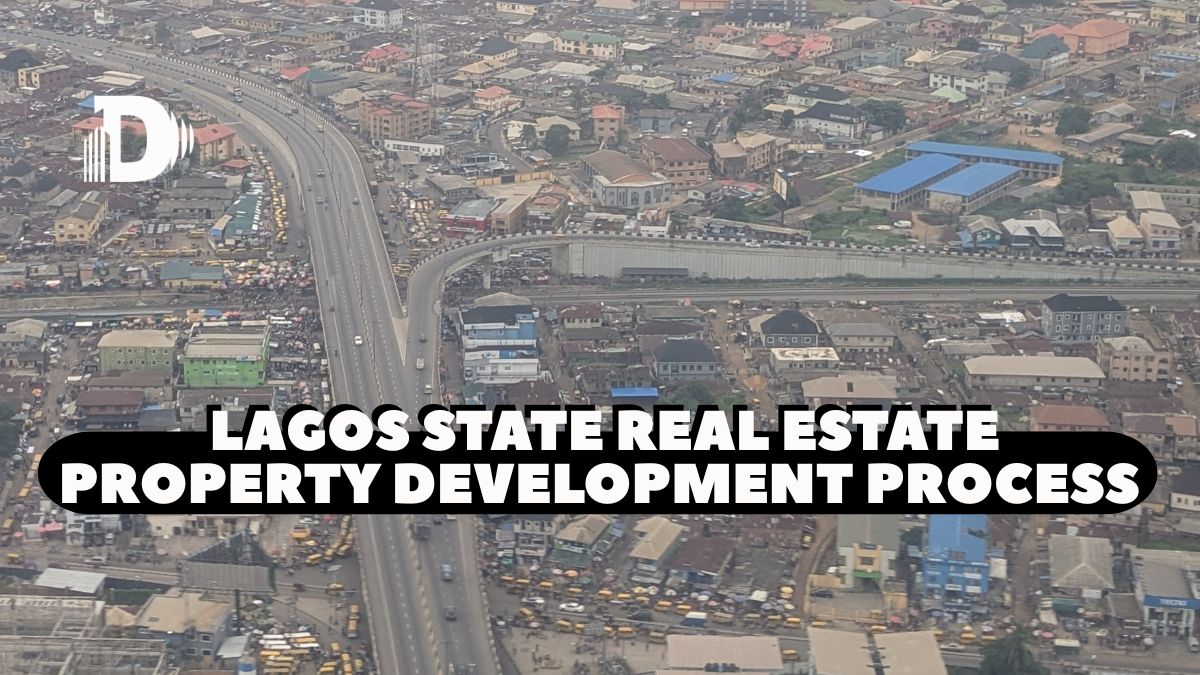
Lagos State Real Estate Property Development Process (Step-by-Step Guide)
Lagos is not just Nigeria’s commercial capital — it is Africa’s most intense real estate laboratory. Lagos is not just a city. Lagos is pressure. Lagos is opportunity in motion. Lagos is where land turns into legacy — or loss — depending on how well you understand the process. Every year, billions of naira are poured into property development across Lagos State. Some of those investments mature into estates, commercial hubs, rental cash machines, and generational assets. Others collapse into disputes, demolitions, abandoned projects, and court cases that last longer than the buildings themselves. The difference is not luck. The difference is process mastery. Every road expansion, every new estate, every demolished structure tells the same story: real estate success in Lagos is not accidental; it is procedural. At DEVALOP, we believe real estate wealth begins with clarity, not speculation. This guide is designed to walk you—step by step—through the entire Lagos State real estate property development process, from raw land acquisition to legal occupancy and profitable use. Whether you are a first-time buyer, an aspiring developer, a diaspora investor, or a corporate institution, this article explains what to do, why it matters, and how to do it right. A Complete Step-by-Step Guide for Investors, Developers, and First-Time Builders This guide breaks down, in plain language, the entire Lagos State real estate property development process, step by step — legally, technically, administratively, and strategically — so anyone can follow it without confusion. 1. UNDERSTANDING THE LAGOS REAL ESTATE ECOSYSTEM Before touching land, you must understand the terrain — not just physically, but legally and institutionally. “In Lagos, ignorance is expensive. The system is structured. The rules are documented. Enforcement is real.” Why Understanding the Lagos Real Estate Development Process Matters (Why Lagos Is Different?) Lagos State has one of the most regulated property environments in Nigeria. Unlike informal markets where buildings appear overnight, Lagos operates a layered system involving land laws, planning authorities, environmental controls, and building enforcement agencies. Lagos operates at a scale unlike any other state in Nigeria: You don’t “just build” in Lagos. You develop within a stated framework. And skipping any step can lead to: Understanding the process is not optional — it is the first investment. READ ALSO: Oyo State Real Estate Property Development Process (Step-by-Step Guide) 2. LAND ACQUISITION (THE FOUNDATION OF EVERYTHING) 2.1 Identify the Right Location for the Right Purpose Every real estate project begins with land — but not every land is developable. Or let’s put it this way, “every successful property development must begins with legally viable land.” Land acquisition exercise must begin and end with choosing the right land the right way. Land is not valuable just because it exists. It is valuable because of: A smart developer does not ask: “Is this land cheap?”Instead, they ask: “Can this land legally become what I want to build?” And that soul-touching question comes from the place of understanding of the lay of lands and its usefulness – not all lands are equals. 2.2 Understand Land Ownership in Lagos Under the Land Use Act of 1978, all land in Lagos State is vested in the Governor. What individuals and companies hold is not absolute ownership — it is a right of occupancy. This is why title documents matter more than location hype. If you don’t have it documented in the government’s database, you don’t have a land. Documentation is everything. 2.3 Common Land Title Documents in Lagos Before purchasing land, you must confirm the title type that comes with the land. The table below will guide you. You must understand these terms before paying a kobo: “Any land without a verifiable title path is high risk, not an investment.” – Olawale Daniel 2.4 Due Diligence: The Non-Negotiable Step Skipping due diligence is how people “buy problems”. Before payment: At DEVALOP, we treat land verification as risk engineering, not paperwork. 3. SURVEY & LAND REGISTRATION Once land is confirmed and acquired, it must be professionally defined, mapped, and registered. 3.1 Survey Plan Preparation A licensed surveyor prepares a survey plan showing: This survey is submitted to the Office of the Surveyor-General of Lagos State for charting. 3.2 Why Survey Charting Matters (Why Are Survey Plans Important?) A survey plan: And conducting a survey charting confirms: Survey plans must be charted at the Office of the Surveyor-General of Lagos State to confirm the land is developable. Without a survey plan to conduct a charting session at the Surveyor’s General office, no approval. No approval, no development. 4. ENTITY STRUCTURE (Company Formation) & LEGAL IDENTITY Serious real estate development requires a legal structure (legal personality). 4.1 Company Registration Registering a development company is a must and most noble step to properly and legally formalizes your existence in Lagos real estate development space. Developers are expected to: Government approvals, financing, and institutional partnerships are tied to corporate legitimacy. Why This Matters: 4.2 Industry-Specific Compliance Depending on scope of operations, developers may require: This step separates informal operators from institutional developers. By complying with some of these guidelines and directives, you just established your footprint in the Lagos State Real Estate Development space by moving from informal operator to institutional-grade developer. 5. DEVELOPMENT CONCEPT & FEASIBILITY STUDY Before drawing plans, developers must define intent. Clarity of purpose must exist. 5.1 Define the Development Type You must ask questions. Is the project: Upon knowing the development type, next on the list is to know what category your project falls into. Each category has: 5.2 Conduct a Feasibility Study & Financial Planning A solid feasibility study considers a lot of underlying factors that may delay or affect your development A feasibility study analyzes: This step prevents: Real estate rewards patience and planning — not guessing. 6. PLANNING PERMIT (THE HEART OF LEGAL DEVELOPMENT) This is where many people fail. Planning Permit is the legal gateway to construction. In Lagos State, no building is legal without a Planning Permit. 6.1 What Is a Planning Permit? It is official