
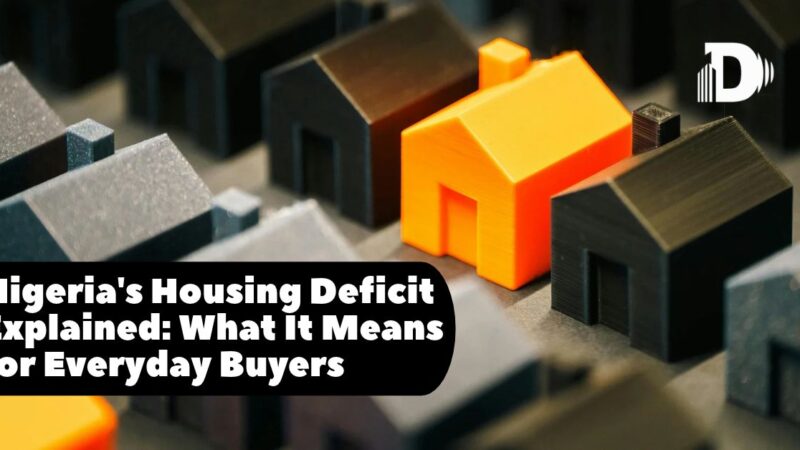
Nigeria’s Housing Deficit Explained: What It Means for Everyday Buyers
If you’ve ever wondered why rent keeps rising in your city even as new buildings seem to go up everywhere, or why finding an affordable, well-located home feels harder every year, there’s a specific number behind that feeling — and it’s larger and more precisely measured than most people realize.
This guide explains Nigeria’s housing deficit in plain terms: what the number actually is, where it comes from, and — more practically — what it means for you specifically, whether you’re renting, saving to buy, or already invested in property.
The Number, Explained Simply
For years, Nigeria’s housing shortage was widely quoted as somewhere between 17 and 20 million homes — a figure that got repeated so often it started to feel like settled fact, even though nobody could quite point to where it originally came from. That changed in early 2026, when a dedicated National Housing Data Technical Committee, working with Nigeria’s Federal Ministry of Housing and Urban Development and applying a methodology developed with the World Bank, released a properly measured figure: 14.925 million housing units that simply don’t exist and need to be built.
That’s not the whole picture, though. A separate figure — roughly 15.2 million additional homes that do exist, but fall below basic livability standards (reliable water, electricity, sanitation) — brings the combined shortfall, homes that need to be built plus homes that need to be fixed, to a number some officials have described as approaching 28 million units nationwide.
To put that in perspective: closing this gap at a meaningful pace would require building somewhere between 500,000 and 700,000 new housing units every single year for the next decade. For comparison, that’s a construction pace Nigeria has never sustained even close to.
Why This Number Matters to You Personally, Not Just the Country
A national statistic like this can feel abstract, but it translates directly into things you probably already experience:
If you’re renting, the housing deficit is a big part of why competition for decent, affordable units in growing cities feels so intense, and why landlords often hold significant leverage in rent negotiations. When demand for housing structurally outpaces supply by this much, prices don’t behave the way they would in a balanced market.
If you’re saving to buy your first home, the deficit explains part of why land and property prices in Nigeria’s major cities have climbed as consistently as they have — genuine, sustained demand pressure, not just speculation. It also explains why waiting for prices to “come back down” in a high-demand corridor is often a losing strategy, since the underlying shortage isn’t resolving any time soon.
If you already own property or are considering investing, the deficit is arguably the single strongest structural argument for Nigerian real estate as a long-term asset class. Demand this far ahead of supply, sustained by population growth that shows no sign of slowing, tends to support values over the long run — which is a big part of why real estate overtook oil and gas as a contributor to Nigeria’s GDP following the 2025 statistical rebasing, a shift covered in full in our market report.
Where the Deficit Is Worst
The shortage isn’t distributed evenly. The National Housing Data Technical Committee’s report found Kano State carrying the highest regional deficit, and Bayelsa State the lowest, with the North-West and North-East geopolitical zones facing the most severe pressure overall. For someone deciding where to invest, this regional unevenness matters: it suggests some markets are further from any kind of supply-demand balance than others, which shapes both the urgency of demand and the realistic timeline for that demand to be met.
Why It’s So Hard to Close
Three structural forces make this deficit genuinely difficult to close quickly, and understanding them helps explain why it’s not simply a matter of “building more.”
Financing remains the biggest bottleneck. Mortgage penetration in Nigeria sits below 1% of GDP, compared to over 30% in South Africa — meaning the financing tool that typically lets ordinary buyers afford a home over time, spreading cost across decades rather than paying in full upfront, remains largely unavailable to most Nigerians. Without accessible financing, both the demand side (buyers who could otherwise afford a home) and the supply side (developers who could otherwise build at scale, using construction financing) stay constrained.
Population growth keeps adding to the gap faster than construction can close it. Nigeria’s population is growing at roughly 2.6% annually, alongside continued rural-to-urban migration concentrating demand in cities that are already under the most pressure.
Land titling friction slows down formal development. As our guide to Nigeria’s land titling system explains in detail, obtaining clean, verified title and Governor’s Consent can be slow and costly — friction that discourages exactly the kind of large-scale, formal housing development that would help close the deficit fastest.
What’s Actually Changing
The picture isn’t entirely static. Reform discussions are underway around the Land Use Act itself, including proposals to streamline Governor’s Consent and build a unified national digital land registry. The Federal Mortgage Bank of Nigeria has expanded targeted financing options, including a diaspora-specific mortgage window launched in 2026. And diaspora remittance capital — now flowing through formal channels at record levels, with Q1 2026 alone bringing in more than the combined first quarters of the previous five years — represents a genuine, if partial, source of private capital that can help fund new construction where the formal mortgage system currently can’t reach.
None of this closes a 28-million-unit gap quickly. But it does mean the structural conditions driving Nigeria’s housing shortage are receiving more serious policy attention now than they have in years — which matters for anyone trying to understand whether this pressure is likely to ease or intensify over the coming decade.
What This Means for Your Own Decision
If you’re weighing whether to buy now or wait, rent or buy, or where to invest, the housing deficit data points toward one fairly consistent conclusion: structural demand pressure in Nigeria’s property market isn’t a short-term or temporary condition. It’s the product of population growth, urbanization, and financing gaps that will take years, likely a decade or more, to meaningfully close — which is a meaningfully different situation than a market experiencing a temporary price spike that’s likely to correct.
For anyone specifically weighing a purchase, that structural reality is why the diligence steps covered throughout this guide series — independent title verification, understanding which corridors are earliest in their growth curve, and choosing a genuinely reliable developer — matter as much as ever. A market with this much unmet demand rewards buyers who move carefully and verify thoroughly, not ones who rush simply because prices are rising around them.